Category: Time Management

  • Use your time wisely


    It’s been two years since I wrote about time management but the topic is still close to my heart. The reason is pretty obvious but given the nature of product management I find it even more relevant to tightly manage your time or by end of the week you’re going to scratch your head on what have you accomplished.

    In the last Product TO meet up I moderated a session on this very topic. In addition to my own tactics, I came away with a few tricks on how other people manage their time. Let’s go through them:

    Have a plan of attack

    Have a plan of what you want to achieve in a week. It is extremely important to write it down and prioritize it based on what’s important and urgent and equally important on what’s important and not urgent like reading, learning and talking to customers. If your schedule is all over the place and you are constantly fire fighting plan your day to the hour. Of course you will have to change your plan several times as your day/week develops but having an plan and a framework of what you want to get out of your time will help you decide which meetings to skip and if things must be done or can wait.

    Take a easy with M&Ms

    M&M was the term used in “rework” (and if you haven’t that I strongly recommend that you do. It’s easy to read and oh so good) which refers to “Meetings and Managers”. While I do have a few tips on how to work with your boss my following are my tips will focus on avoiding and eliminating (zombie) meetings.

    I hate nothing more than those 1.5 hour meetings you go with 20 other people where everyone discusses something and you come out of it with no decisions made, no clarity on anything and a promise of yet another follow-up meeting to continue this torture. I know you feel me, you’ve been there too!

    Yes you can! Eliminate status meetings

    Status meetings (specifically product team status meeting) are one of the most annoying ones ever. I’m talking about the one where each PM reports back what they’ve done with their teams in the past week. While this is valuable for director of product or stakeholders working with those PM, it’s completely useless for peers who’re working on totally unrelated products/projects. The best way to solve this is to ask everyone to write their updates/blockers etc in a wiki page by a certain time and day and the managers and stakeholder go over it themselves and pull certain PMs for further questions. This approach also has the bonus of providing a historical week-by-week view of who has done. Pooofff one meeting gone from your calendar forever!!!

    Don’t schedule recurring meetings

    I challenge you to instead of a scheduling a recurring weekly meeting, evaluate every week to see if you still need to have it. Be honest with yourself! If you’re driving the meeting and you’re not ready (more about this on point below) with what you want to discuss postpone it. I even suggest to experiment with daily standup meetings, I haven’t seen any major downside in reducing daily stand ups from every day to every other day.

    Also if you are invited to a recurring meeting and you realize you haven’t had a thing to say in the last 20 minutes of the meeting, you’re clearly not adding value. Start skipping them!

    Go into meetings with an agenda and come out of it with a clear outcome 

    If you are driving the meeting it’s extremely important to do upfront work. What is the purpose of the meeting? Are you bringing up a proposal and looking for feedback as part of ideation? are you trying to make a decision? are you answering questions as part of grooming and sprint planning? Whatever your goal is make it clear in the agenda. Have someone to take notes, or write them yourself and then summarize what discussed, what actionable items are and who is responsible to act on them and by when.

    Action items must be clear enough that it doesn’t leave room for interpretation and small enough that is doable within the timeframe proposed. Having a date attached to action item makes it more palpable makes it actually happen.

    Another neat trick is instead of going through a proposal or presenting a slide deck during the meeting, send it in advance to everyone to read and because most people don’t read, send a reminder before the meeting. Make sure to make it clear for everyone that the meeting is intended for deeper discussion or answering questions as oppose to high-level presentation.

    And finally if I had the authority and power for my meetings I would ban cellphones and laptops except for note taker and presenter. I have been to way too many meetings feeling I’ve wasted my time because no one is listening or paying attention. It is disrespectful. If something worth our time then it’s worth our time. How useful a meeting can be when attendees are slacking with one hand and tweeting with the other?

    Please Slack responsibly

    If you are working completely remotely I get it! Slack (the hottest messaging app du jour) is very useful to have short and efficient outburst of communication to get answers and stay connected but if you are slacking with your co-worker across the room all day long, then what’s wrong with you? No matter how fast you type you can still talk faster if you have a 5 min conversation.

    And please don’t get me started on a making a product decision with 15 other people across a slack channel. The conversation almost always goes through a tangent and what remains of it is one-liners that 15 people chimed on without any conclusion. This is the opposite situation that eliminating a meeting actually works worse! Have a super short ad-hoc meeting with few key people, look at the trade-off make the decision and then feel free to broadcast in Slack!

    Hope this is useful for you!

    Picture is taken from news18 website.
  • My Recommended Books with Strong Ties to Product Management

    Past few months I have read the following books all related to product management. They were all excellent. I learned new techniques to write user stories, tackle prioritizing them and to strengthen my concentration on the task at hand. They also provided me new perspective on what skills I need to master to become a better leader.

    Book Summaries


    user-story-mapping

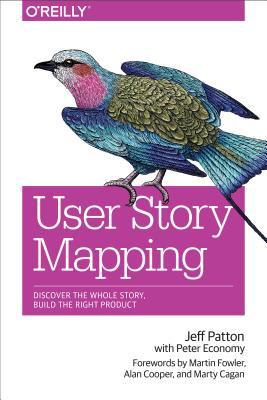
    User Story Mapping

    I came across the book shortly after I became a Product Owner to my newly-formed agile team and like many other newbie product owners I was struggling with how to chunk out the product I envisioned to build into smaller pieces by writing user stories. I also had difficulty on how to write these stories in a way that captures all the nuances and requirements. Thankfully User Story Mapping provided an answer on above issues for me. Here are the two main things I learned from it:

    As a Product Owner I can never capture all the requirements of a product and I can’t specify all the functional and technical details in just one document. Even if I could, this document would be so massive that most people wouldn’t read it. Even if they would they will have their own interpretation of what it means!!

    A better approach is to outline my ask as a story and use that as a starting point to a productive conversation. By the end of this conversation, the ask is more clearly defined and everyone have a shared understanding of what it is. My goal is then to document our understanding using words and pictures.

    The real goal of using stories is shared understanding. Stories get their name from how they should be used, not what should be written.

    Another valuable lesson is that focusing solely on backlog is dangerous. Without having a big picture of what the product is trying to accomplish and what types of activities people use this product for, building one small thing after another from a flat backlog results in a product with mismatched features. The solution is to build a Story Map!

    The biggest benefit of creating a user story map prior to building from a backlog is that it forces you to tell the story of all the interactions the user has with the product to accomplish something. This will give you the big picture of what your product does and in the process it identifies gaps that no one has thought about before.

    Creating a user story map is easy. At the top of the map are big stories (also known as user activities). These stories are too big to do in one sprint or an iteration but once implemented they provide major functionality to the user. The big stories are placed next to each other from left to right. If nothing else, reading these stories provides a view of the whole system.

    However to get these big stories done we need to break them down further into smaller stories. These smaller stories or tasks are placed in the second row and this breaking down continues to a level that provides enough clarity into what the system does. For more detailed explanation check out this blog post from author itself.


    hard-thing-about-hard-things

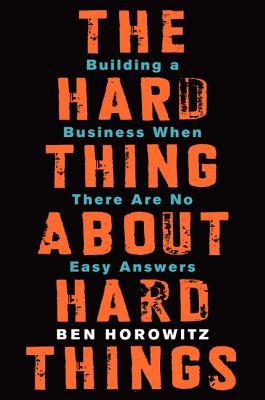
    The Hard Thing about Hard Things:

    I came across ‘The Hard Thing about Hard Things’ through reading Ben Horowitz’s blog and I am glad I read it. The book has two main parts: The first part is an easy to read, humorous but enlightening account of how Ben Horowitz managed Loud Cloud and Opsware, two companies he co-founded and run as a CEO. The second part is lessons  learned along the way of managing though hard situations.

    Second part of the book has too many good advice to recount them all and they go beyond my focus on Product Management. These are my most important takeaways:

    What resonated the most with me was the importance Ben placed on providing the right training for the job and making it clear what an employee is accountable for. He argues that if you don’t train your people, you establish no basis for performance management. As a result, performance management in your company will be sloppy and inconsistent.

    I personally have always struggled with this one. Unlike a developer or a designer who produces tangible results, product manager’s work spread across many areas and is not as tangible. If my company provides training for the specific skills and what it expects of me, it will save me a ton of time and the confusion and frustration of trying to figure this out by trial and error.

    Another issue this book confirmed for me is that everywhere there is bias to dismiss or rationalize leading indicators of bad news and only listen to good ones. Doesn’t this paragraph rings true in your head?

    If a CEO hears that engagement for her application increased an incremental 25% beyond the normal growth rate one month, she will be off to the races hiring more engineers to keep up with the impending tidal wave of demand. On the other hand, if engagement decreases 25%, she will be equally intense and urgent in explaining it away: “The site was slow that month, there were 4 holidays, we made a UI change that caused all the problems. For gosh sakes, let’s not panic!

    This explains why when Product Managers and executives see the growth is stalling and partners are leaving they avoid the obvious: The product is not the best in the market and is lagging behind competition. There is not much to do but to take the hard step of building a better product.

    Finally the most important and the most unexpected truth that came out of this book is on how to hire good executive. It talked about how to hire for key run a specific job (like VP of sales) for sometime yourself to learn what skills for that job you’re looking for. Although this one is not directly related to Product Management per se, I found it incredibly valuable in not only for hiring but also building framework for career development. You can read it in its own entirety in this brilliant post.


    deep-work

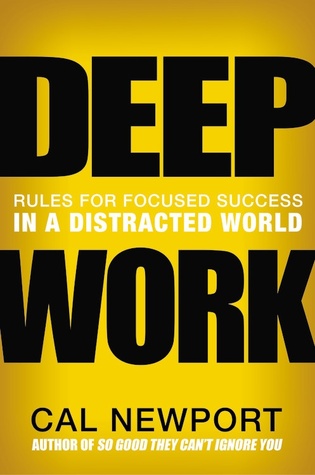
    Deep Work:

    This book is not directly related to Product Manager but it’s a book that if you are committed to follow through its advice it will change your life. The first part of the book starts with what Deep work is and why it is important to work on truly hard things with intense focus?

    Deep work is the ability to focus without distraction on a demanding task. It’s a skill that allows you to quickly master complicated information and produce better results in less time and it is a extremely valuable skill to have in the over-distracted world we live it.

    The author,  Cal Newport, goes on to explain in great detail on why deep work is valuable and meaningful but it is still rare. And honestly you do not need to read page after page to know why: Just take a good look at your work environment and daily habits and keep a tab on hours you actually focus on a hard task and I bet you’d be surprised on how little and fragmented your deep work is. I am first to admit that I suffer from a distraction and constant context switching: With so many interesting articles to read my browser has tens of tabs open that I read only half through. As part of open office trend and agile work style I work in a large room shared with 9 other colleagues and an ongoing open video conference so anyone can ask me anything anytime. And my day most of the time slices to a million of 30 min meetings.

    So how to cultivate the habit of working deeply in out day-to-day life? Here are my take away from the strategies suggested to in the four main rules suggested in the book to achieve deep work:

    Work Deeply

    Unsurprisingly this is rule number 1 on how to allocate enough time in your life to an uninterrupted work. There are multiple philosophies to schedule deep work in your day. For me building a daily routine around deep work and practicing it everyday is the way to go.

    Embrace Boredom


    Focus is a skill that must be developed before you can do it with any effectiveness and in order to strengthen your ability to focus, you must avoid the temptation to entertain yourself the minute you are bored by reaching out for the phone. One  suggested method to practice this skill is to cut off internet for some time interval and focus on the task at hand. Don’t check emails, surf the web or any other internet related activity during this time.

    I have been doing this for the past couple of days and I can tell you firsthand it’s hard! As soon as I find something that is hard to work through or make progress, a few seconds later, I catch myself to have opened a new tab or checked my email unconsciously.

    Quit Social Media

    Out of all rules outlined the most provocative one is to quit or dramatically cut back on the most beloved and addicting social media sites like Facebook, Twitter, Snapchat and so on. A core idea of this rule is that most people select digital tools using the any benefit mindset, which claims that you should use a tool if it can provide any benefit. This rule argues that you should instead use the craftsman mindset in which you only select the tools that provide the most substantial benefits to the things you find most important.

    Drain the shallows

    Finally having a fix time where you leave work and wrap up your work day forces you to be ruthless on what are the important stuff that get done.

  • Procrastination

    ahh-procrastination

    Procrastination sums up the idea of putting off doing some thing that you need to do. We all are guilty of procrastinating to some extent but some people (including me) are really awful at it. I confess that I’ve had instances of putting the work off and making excuses to the point that looking at the item on my to-do list or even thinking about it hurts (ouch!). Later on, once the morbid task is done I think why on-earth I didn’t get rid of it faster?

    So I know I have to change my attitude about Procrastination. Here are things I’ve learned so far:

    Procrastination is a “keystone habit” which means that changing this habit will have a cascading effect on changing other habits in your life. I learned this from a book called as “Power of Habit“, a very well written with a fascinating topic by Pulitzer prize-winning Charles Duhigg.

    Procrastination is specially a bad habit to have if you’re trying to learn new and difficult subjects. When you put off of doing the coursework required to be done in a week and you cram it in a day, you will not learn as much and forget the concepts. It explains that our brain learns far more effective when we practice and study every day in small chunks over spending a whole day and night on the subject. This one I learned from another book called “A Mind for Numbers: How to Excel at Math and Science (Even If You Flunked Algebra)“. There is a great course on Coursera on how to learn subject as well.

    Procrastination is bad but “Creative Procrastination” is good!! This basically means putting off things temporarily or permanently when you decided that they’re not important to do. This last one is from Brian Tracy’s “Eat that Frog” book. This one is specially becomes important when you start identifying your goals. Overtime, it becomes evident what are the important task that worth spending time on and what are not. Brian’s book is very easy to read and gave me some good tactics but ultimately I finished it wanting more.

    Now I’m reading “168 Hours: You Have More Time Than You Think” which delves on the exact same topic of figuring out your goals, finding your core competencies and spending your time only on those. It’s much more elaborate, relatable and provides a lot of interesting context and statistic to justify that I need to take control of my time.

    Finally, Eric Barker has this fantastic blog post that talks about 4 research-backed methods for beating procrastination. My take away: “The Secret To Good Habits Is Eating Chocolate With Friends!

    Obviously I knew a lot of these things all along but acknowledging explicitly makes me motivated to write down my goals, make plans for them and then track my time to see how I’m doing. I write more when I make a good progress worth sharing again! Next post will be about the need to for being a hands-on product manager 🙂

  • Time Management

    Recently I’ve become very interested in topic Time Management. It all started with Randy Pausch fantastic video which I stumbled upon a few years. It you haven’t watch it you must:

    Although a cliché, time is really all we have and if we want to accomplish ideas we dream of, we have to make time for them.  I noticed that if I don’t manage my time, it’s so easy let the ‘busy-ness’ of daily life brush aside all the stuff that I want to do. I love this quote from him:

    You dont find time for important things, you make it

    I made a few progresses in the following fronts:

    • Managing email: I’m not at in-box zero level but on most days all emails in my inbox can fit above the fold
    • Reading, learning about time management: I read “Eat that Frog” and I’m reading 168 Hours. Both are filled with practical techniques on how to focus on what matters.
    • Using Pomodoro: I started to practice using pomodoro and it definitely helps me reduce frequency of interruptions and increase my focus. But I still haven’t mastered it yet.

    And these are changes that I’m tracking in my daily routine:

    I delve deeper into this very interesting and relevant topic again soon.