Category: Software development

  • My Recommended Books with Strong Ties to Product Management

    Past few months I have read the following books all related to product management. They were all excellent. I learned new techniques to write user stories, tackle prioritizing them and to strengthen my concentration on the task at hand. They also provided me new perspective on what skills I need to master to become a better leader.

    Book Summaries

    user-story-mapping

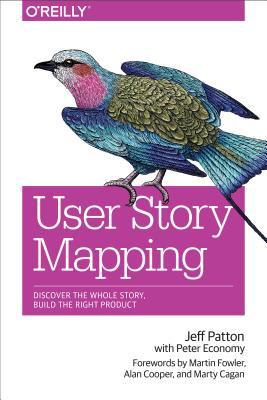
    User Story Mapping

    I came across the book shortly after I became a Product Owner to my newly-formed agile team and like many other newbie product owners I was struggling with how to chunk out the product I envisioned to build into smaller pieces by writing user stories. I also had difficulty on how to write these stories in a way that captures all the nuances and requirements. Thankfully User Story Mapping provided an answer on above issues for me. Here are the two main things I learned from it:

    As a Product Owner I can never capture all the requirements of a product and I can’t specify all the functional and technical details in just one document. Even if I could, this document would be so massive that most people wouldn’t read it. Even if they would they will have their own interpretation of what it means!!

    A better approach is to outline my ask as a story and use that as a starting point to a productive conversation. By the end of this conversation, the ask is more clearly defined and everyone have a shared understanding of what it is. My goal is then to document our understanding using words and pictures.

    The real goal of using stories is shared understanding. Stories get their name from how they should be used, not what should be written.

    Another valuable lesson is that focusing solely on backlog is dangerous. Without having a big picture of what the product is trying to accomplish and what types of activities people use this product for, building one small thing after another from a flat backlog results in a product with mismatched features. The solution is to build a Story Map!

    The biggest benefit of creating a user story map prior to building from a backlog is that it forces you to tell the story of all the interactions the user has with the product to accomplish something. This will give you the big picture of what your product does and in the process it identifies gaps that no one has thought about before.

    Creating a user story map is easy. At the top of the map are big stories (also known as user activities). These stories are too big to do in one sprint or an iteration but once implemented they provide major functionality to the user. The big stories are placed next to each other from left to right. If nothing else, reading these stories provides a view of the whole system.

    However to get these big stories done we need to break them down further into smaller stories. These smaller stories or tasks are placed in the second row and this breaking down continues to a level that provides enough clarity into what the system does. For more detailed explanation check out this blog post from author itself.

    hard-thing-about-hard-things

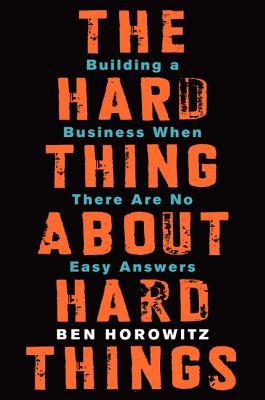
    The Hard Thing about Hard Things:

    I came across ‘The Hard Thing about Hard Things’ through reading Ben Horowitz’s blog and I am glad I read it. The book has two main parts: The first part is an easy to read, humorous but enlightening account of how Ben Horowitz managed Loud Cloud and Opsware, two companies he co-founded and run as a CEO. The second part is lessons  learned along the way of managing though hard situations.

    Second part of the book has too many good advice to recount them all and they go beyond my focus on Product Management. These are my most important takeaways:

    What resonated the most with me was the importance Ben placed on providing the right training for the job and making it clear what an employee is accountable for. He argues that if you don’t train your people, you establish no basis for performance management. As a result, performance management in your company will be sloppy and inconsistent.

    I personally have always struggled with this one. Unlike a developer or a designer who produces tangible results, product manager’s work spread across many areas and is not as tangible. If my company provides training for the specific skills and what it expects of me, it will save me a ton of time and the confusion and frustration of trying to figure this out by trial and error.

    Another issue this book confirmed for me is that everywhere there is bias to dismiss or rationalize leading indicators of bad news and only listen to good ones. Doesn’t this paragraph rings true in your head?

    If a CEO hears that engagement for her application increased an incremental 25% beyond the normal growth rate one month, she will be off to the races hiring more engineers to keep up with the impending tidal wave of demand. On the other hand, if engagement decreases 25%, she will be equally intense and urgent in explaining it away: “The site was slow that month, there were 4 holidays, we made a UI change that caused all the problems. For gosh sakes, let’s not panic!

    This explains why when Product Managers and executives see the growth is stalling and partners are leaving they avoid the obvious: The product is not the best in the market and is lagging behind competition. There is not much to do but to take the hard step of building a better product.

    Finally the most important and the most unexpected truth that came out of this book is on how to hire good executive. It talked about how to hire for key run a specific job (like VP of sales) for sometime yourself to learn what skills for that job you’re looking for. Although this one is not directly related to Product Management per se, I found it incredibly valuable in not only for hiring but also building framework for career development. You can read it in its own entirety in this brilliant post.

    deep-work

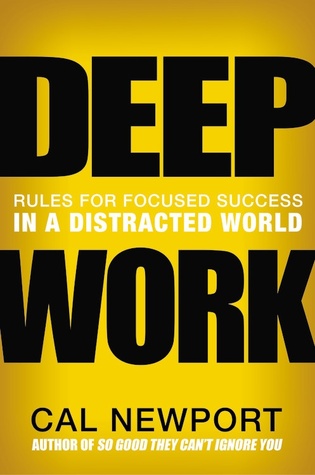
    Deep Work:

    This book is not directly related to Product Manager but it’s a book that if you are committed to follow through its advice it will change your life. The first part of the book starts with what Deep work is and why it is important to work on truly hard things with intense focus?

    Deep work is the ability to focus without distraction on a demanding task. It’s a skill that allows you to quickly master complicated information and produce better results in less time and it is a extremely valuable skill to have in the over-distracted world we live it.

    The author,  Cal Newport, goes on to explain in great detail on why deep work is valuable and meaningful but it is still rare. And honestly you do not need to read page after page to know why: Just take a good look at your work environment and daily habits and keep a tab on hours you actually focus on a hard task and I bet you’d be surprised on how little and fragmented your deep work is. I am first to admit that I suffer from a distraction and constant context switching: With so many interesting articles to read my browser has tens of tabs open that I read only half through. As part of open office trend and agile work style I work in a large room shared with 9 other colleagues and an ongoing open video conference so anyone can ask me anything anytime. And my day most of the time slices to a million of 30 min meetings.

    So how to cultivate the habit of working deeply in out day-to-day life? Here are my take away from the strategies suggested to in the four main rules suggested in the book to achieve deep work:

    Work Deeply

    Unsurprisingly this is rule number 1 on how to allocate enough time in your life to an uninterrupted work. There are multiple philosophies to schedule deep work in your day. For me building a daily routine around deep work and practicing it everyday is the way to go.

    Embrace Boredom


    Focus is a skill that must be developed before you can do it with any effectiveness and in order to strengthen your ability to focus, you must avoid the temptation to entertain yourself the minute you are bored by reaching out for the phone. One  suggested method to practice this skill is to cut off internet for some time interval and focus on the task at hand. Don’t check emails, surf the web or any other internet related activity during this time.

    I have been doing this for the past couple of days and I can tell you firsthand it’s hard! As soon as I find something that is hard to work through or make progress, a few seconds later, I catch myself to have opened a new tab or checked my email unconsciously.

    Quit Social Media

    Out of all rules outlined the most provocative one is to quit or dramatically cut back on the most beloved and addicting social media sites like Facebook, Twitter, Snapchat and so on. A core idea of this rule is that most people select digital tools using the any benefit mindset, which claims that you should use a tool if it can provide any benefit. This rule argues that you should instead use the craftsman mindset in which you only select the tools that provide the most substantial benefits to the things you find most important.

    Drain the shallows

    Finally having a fix time where you leave work and wrap up your work day forces you to be ruthless on what are the important stuff that get done.

  • 5 Tips for Managing Products Remotely

    After reading A Year Without Pants I became interested to know more about remote work and specifically how it works with product management. What qualities are required? What are the advantages and disadvantages? so I did some research such and interviewed a couple of my colleagues who work remotely as Product Managers. I like to share what I learned along the way with you. Let’s get started:

    The practice of working remotely has been on the rise for sometime. In US alone, number of people who regularly work-at-home has grown by a whopping 103% since 2005. (For more interesting data take a look at latest Telecommuting statistics). There is no denial that work from home is a real attractive option and if you need more convincing reasons just read the book Remote. I myself dream of working from home where I don’t need to commute to work everyday (specially in winter time), I can get something done without getting interrupted multiple times and have flexibility over my schedule.

    However most of the telecommute jobs I have seen are for well defined jobs such as software engineers, designers and customer support members.  There are few remote product manager jobs out there and I have always been wondering why? Can it be that there is no need for product managers in companies where work is done 100% remotely?

    I believe the answer lies in company’s size and maturity and not on how it’s distributed. In small companies with a single product and  a small team, different team members take on additional responsibilities to divvy up the work. Usually the founder who is also the CEO takes on responsibilities such as talking to customers and defining product vision. Then designers and developers are responsible for turning that vision into workable software. In this setting, the product management role is distributed among the team and no single person is responsible for the job.

    However as soon as the company grows and the product becomes more complex the work itself becomes too much of an overhead to do for designers, developers and founders on top of what their main responsibilities. Someone needs to clarify Who we are building for and Why to free up the rest of the team to focus on How. This is when Product Manager is added to the team. (Take a look at black box of product management article for an in-depth explanation).

    So if being a remote team as oppose to a co-located one has no effect on having a product manager role, how does remote product management work? What qualities are required? What are the advantages and disadvantages? I sat down with three of my colleagues who all work as Product Managers remotely to get answers to my questions.

    For my first interview I talked with Alex whom I had the pleasure of working with for a long time at OANDA. OANDA’s main focus is currency trading and its popular online trading platform known as fxTrade enables trading volume of several billion dollars a day. Alex has been working remotely for the past 6 years and he currently manages fxTrade across all platforms (Web, Mobile Browser, Mobile App). Design and development are all centrally done in Toronto. Alex travels every 2-3 weeks from San Francisco to Toronto and stays for a week.

    Then I sat down with Barbara who works as Product Manager for Mozilla. Barbara works on Firefox browser for Android app. Her development team is geographically dispersed across the globe. Barbara is based in Toronto but she travels once a month to one of Mozilla offices in States and stays with the team for a week.

    My final interview was with Saeed who works in Product Management at Informatica. Informatica provides solutions around data for the Cloud, big data, real-time and streaming. Saeed is based in Toronto but his team is spread across India and in northern California. Except for annual planning meetings in Informatica headquarters he does not travel.

    Top 5 observations about working as a remote Product Manager:

    Here are the most interesting things I learned through my interviews:

    1. We all work remotely to some degree

    “Business expand across locations. With the exception of small companies, where everyone is in one location, as a Product Manager you have to work with remote people and teams… and of course, customers and partners are NEVER at HeadQuarter. 🙂 “

    When you come to office even when you are co-located with the development team, you need to work with other parts of business such as Sales, Marketing, and Customer Care which may be at different locations and time zones. So being able to work with others through email, phone, chat or whatever remote communication channel is a must no matter how you work.

    2. Communication and Collaboration

    “None of the team members I regularly work with are in the Toronto office, pretty much 99% of my meetings are held over Vidyo (a video chat system used at Mozilla)…We [also] heavily use IRC and Slack, as well as Bugzilla and email to communicate.”

    Email, phone, video conferencing and instant messaging (Slack being the most popular one) are used for communication with team members. However what is more important than choice of tools is to make sure crucial information isn’t lost between colleagues. Barbara and Alex find traveling at least once a month necessary to make sure that everyone in the team is in-sync.

    For collaboration, screen sharing software like WebEx, project management tools such as Trello and wiki softwares to quickly edit content like Confluence and Google Docs are all part of the remote toolbox. Good written communication is the single most important skill to make sure everyone has a shared understanding of what the ask is and how to provide a solution.

    3. Trust is the Key

    “I have built a close relationship with my team over time and now I trust my them to know my vision really well… I’m confident that they will be able to represent and defend this vision to others during a meeting when I’m not in the room.”

    Product Manager has to earn the respect and trust from the programmers and designers. With trust, PM can discover how to get the best possible work from the team. If there is clarity on the goal and a criteria that defines it, then we can speak the same language about what we need to do to get there. This issue becomes even more important when you work remotely as you need to build relationship over time and and you need to make sure you can effectively convey the vision to everyone on the team.

    4. Biggest Advantages

    “I can be more productive because I’m working somewhere else. I don’t get pulled into meetings where I can’t contribute mostly because I’m not in the office. As a result, until something important comes up that needs my attention I don’t get called into meetings.”

    One thing that stands out in addition to all of the advantages of remote working, is the fact that you don’t get tied up with unnecessary things to do inside the office. Instead you can use that time into do some strategic activities like talking to customers, delving deep to understand the problem and figuring out product/market fit. These tasks require long and uninterrupted attention which is something that gets harder to come by when you work in a room with 10 other team members and a constant flow of chatter and calls.

    5. Main Drawbacks

    “There are advantages to working in the same office as the product team. It’s very easy to get the group together to discuss an urgent issue. The proverbial “water cooler conversations” are only possible when you are co-located. There is a lot of information that can be gained simply through casual discussions, having lunch with someone or even “overhearing” something in the hallway. And quite honestly, having timely information IS very important managing products.”

    This quote definitely captures two themes that keep coming up. The first one is you can’t walk into an office and give a brief about what was just decided in another meeting. This disconnect can lead to informational asymmetry and misunderstanding. You have to be very disciplined in dispersing information. Sometimes you need to set up multiple meetings just to convey the same info because it’s hard to set up a meeting that works for everyone. Another important thing is to have a central knowledge repository where everything is organized and be vigorous to keep it up-to-date.

    Finally emergency situation or when a project needs a lot of coordination from multiple teams having an on-site team is so much easier than orchestrating activities between multiple time zones, and only being able to rely on chat, phone and video to work things through.

    Conclusion

    All in all I think working as a remote product manager is not fundamentally different from working with a co-located team.  There will always be a sense of FOMO (fear of missing out) when dealing with remote teams, so over-communicating is often better than assuming team members will find things out through other means. You also have to work harder to build the relationship and get used to different working styles of the team.

    Note about this post’s image: It is taken from Trello blog which has an insightful article about remote working.


  • Writing Technical Stories

    Recently I gave a talk about writing technical stories and ways I have found to slice user stories thinner at Product Camp Toronto. I thought it’d be good to share some ideas from that talk here as well.

    I work as product manager for epost which is one of the biggest online document delivery and management systems within Canada. epost allows users to view, pay and manage bills online and roughly one in ten Canadian use it to view their pay stubs, utility bills and tax statements among others. Right now I am in charge of leading a scrum team to redesign epost to improve web and mobile user experience. I am also responsible to revamp epost API service calls and to integrate them with Canada Post, banks and mobile apps.

    My team is one of the first teams working Agile within Canada Post, so we are all new to the concept of finishing user stories within a two week sprint. And after the first few sprints I realized that we were constantly behind schedule. Our flow for getting a story done looked something like the following:

    user story flow

    Creating API call and gateway call would take half sprint and front-end will work on the last leg of sprint to get it done. So when the story was ready for QA we were out of time and stories kept piling up to the next sprint!

    I also realized during our sprint planning and release planning a bunch of tasks get discovered and brought up that are not identified earlier. By the time these tasks are done, we are already late with the sprint. It was clear to me that I needed to write smaller stories but how?

    With a help of a my great Scrum Master Peter Moreira and User Story Mapping (I review the book in a future post) I came of with the following strategies.

    Write Technical Stories (when necessary)

    I decided since any given back-end service call will be consumed by multiple end-points it makes sense to slice a story further into an API-specific one and a front-end/UI one. API story is still valuable and independent (sort of) but it can be estimated and worked on by itself. This way I could prioritize the API story ahead of front-end story to provide much needed time for UI and QA to be done.

    This was great however I didn’t know how to write user stories about API, web services and other technical stories that are not necessarily user facing. More importantly I was struggling to fit the story into “As a user I want to — so that I can —” template.

    “As a front-end developer I need to supply mail list data so that it shows as a list view of mails” sure sounds weird!

    I came across this excellent article that confirmed my belief not to fit the story into a template when it doesn’t fit. So for technical stories I clearly write Who the end-points consumers of the API call will be, What is expected acceptance criteria of each of the end-points are and what it the expected output of this API is and finally Why this API call is important to develop. I talk to developers to understand what does API generate, how it can be validated and make sure there is alignment on acceptance criteria prior to grooming session. From my point the story is usually done once I can see API call and the data generated in Swagger and all the security criteria is met.

    So a user story that looked like this before:

    —As a Chief Household Officer, I want to filter mail by service provider name so that I more easily find my mail

    the API story will look like this:

    —We need an API call used by Canada Post, native app and our bank partners to filter mail by a service provider so only mails by that provider shows up

    Acceptance Criteria

    • Verify that the request get thru the service layers and receive a reply within 2 seconds
    • Verify that the request has necessary Oauth permission to be exposed externally
    • Verify that the request is generated in both XML and JSON formats
    • Verify that records are returned from oldest to newest

    —Separate Success and Error Stories

    Another trick I’ve found effective to write smaller stories is to focus one user story only on the happy-path, while writing other stories for when things went wrong, edge cases. For example for file creation user story write one story specifically about creating a file without any problem but write several more stories to cover the file name maximum character, acceptable  characters etc.

    I would love to know if you have other ways to slice a story further. Please share them with me in the comments below!

  • How agile is your team?

    Output vs Outcome

    I work at a big corporation that is transitioning to Agile. I know this may come as a shock to my readers but yes it’s true! Although many small companies and start-ups have embraced Agile and Lean ways of working for many years now, big corporations specially corporation not focused on technology are just testing the water when it comes to making this transition. It is a big change for many people who’ve worked the same way for many years.

    Given that my agile team is new and green I was thinking of ways to measure my team and be able to track the progress over each sprint. Here is what I’ve learned:

    The main goal of an agile team must be to minimize output while to maximize outcome and impact

    but what is the difference between output and outcome and how do you measure each?

    Output vs Outcome

    I’m reading the excellent User Story Mapping by Jeff Patton (a review soon to come) and here is how he describes the difference between Output and Outcome:

    “Everything between the idea and the delivery is called output. It’s what we build, but while it’s necessary the output isn’t the real point; it’s not the output that we really wanted. It’s what comes after as a result of that. It’s called outcome. We want to measure what people actually do differently to reach their goals as a consequence of what we’ve built.”

    Take a look at the image above for a moment and let it sink in. It’s crystal clear now isn’t it?

    Measuring Team’s Output

    At this post I’m only concentration on measuring Outputs like features, enhancements, requirements, specification within an Agile team. Measuring Outcomes is really about understanding bigger picture and product/market fit and I like to discuss it completely in a separate topic.

    So here are what I learned:

    For outputs the most common factor to measure is Velocity. Velocity is commonly referred to number of story points completed within each sprint; (and assuming this metric is not abused) it’s valuable as a predictive metric as it starts to normalize to show how much the team can produce in any given Sprint. The expectation is that over time an increased team velocity means shipping more features faster.

    However in my company we are still limited to predefined timelines for enterprise releases (I know this is an almost non-issue for startups) so for my team’s Velocity doesn’t necessarily translate to stories completed and ready to ship. At this point all we can do it to bundle stories completed and mark them as ready to go per release.

    Another metric that I found useful is the number of bugs generated during each sprint. Again over time we want to decrease this. My team is new to AngularJS and one thing that happened is that refactoring the code from one sprint to next broke a lot of things.

    Another interesting point learned from Quora is qualitative feedback we get during Retrospective meeting and use those improve upon. Pick something to improve and track that for a few iterations to make sure things are getting better. Once things have improved stop tracking, and move on to the next pain point. Again in my team’s case we’re trying to see what are the ways we can get rid of mini-waterfall cycle we seem to get trapped on every time. So far we’re concentrating on two issues: 1) increase expertise in Angular by having Angular hours with other developers. 2) interchange roles and responsibilities of back-end API and gate-way/middle-ware developers.

  • What job are customers hiring your product for?

    If you noticed I used the framework of Jobs T0 Be Done in my previous post when I tried to compare multiple email marketing solutions with each other. Asking “What job are you hiring this product for?” is an odd question and it took me some time to wrap my head around thinking about a product like it’s a person or service I can hire. This is an essence of Jobs To Be Done framework but when I talk to people not many know about it. So I researched multiple articles and listened to a couple of podcasts to learn more about it. Without further ado here is what I’ve learned:

    What is Jobs To Be Done and where does it come from?

    If you search Jobs-to-be-Done, you’ll find this video from Clay Christensen, a famous Harvard Business School professor who came up with the framework. (He’s also the guy who came up with the idea of Disruptive Innovation in his seminal book the The Innovator’s Dilemma). Anyway, Clay speaks about a product development issue in a fast food chain where they wanted to sell more milkshakes.

    Their initial approach was to talk to buyers and make changes to milkshake based on this customer analysis. They asked buyers if they like their milkshakes be healthier or more sugary, thicker or thinner etc. This failed. They sold no extra milkshakes, as there was no meaningful insight to be found in analyzing the users themselves. So he suggested that they focus on the job that customers hire a milkshake to do.

    It certainly sounds weird (no-one thinks of “hiring a milkshake”) but switching to that perspective offered new insights. After talking to buyers in this new format, it turns out more than half of the milkshakes are hired to do the job of providing sustenance and entertainment for a long commute. In this regard milkshakes were competing with bagels, bananas, and energy bars. Milkshakes had advantages over energy bars and bananas, as they’re tidier and easier to consume in a car. They beats bagels because bagels are too dry and leave you thirsty in your car. They beats coffee because they are more filling and less likely to don’t leave you desperate for a bathroom in the midst of a 40 minute drive. Once the chain realized this, they were able to make changes that made milkshakes the best tool for the job.

    When using Personas are helpful

    Similar to the restaurant chain example above product designer, product manager and UX/UI  team try to talk to users to understand what they’re looking to get out of  software. They come up with user personas and user roles.  Once personas are defined, then they try to design and define a system in a way to deliver users’ needs and wants as a series of user stories.

    Personas work well when the user base is broken down into different types of users with different needs. For example, if trying to create a market place it is helpful to define distinctive types of personas based on buyers and sellers roles. These personas are definitely helpful to define what your system must fulfill for each of them.

    When Personas are not useful, focus on the Job instead

    However for many products (and I’m thinking many B2C type of software) the customers come in all shapes and sizes, from all countries, all backgrounds, all salaries, all levels of computer skills. In these circumstances defining persona is not as useful as there is no way to group your users into meaningful roles to define a system for.

    Another time when focusing on the job is more helpful is when a situation dictates the solution as oppose to your user’s characteristics or attribute.

    For example, after a long day of work and with an empty fridge, Alan who is single and in his early 30s is looking for a comfort food with minimal prep time and dish washing afterwards. That when he orders Pizza! However the same Alan on Friday night when he has a date  in order to impress his date, he’ll go to a fancy Italian restaurant.

    In both cases the situation and the problem context dictated the solution as oppose to Allan’s attributes of being ‘single’ or ‘in his 30s’.

    Jobs-To-Be-Done framework becomes very useful because the product is better defined by the job they do than the personas it serves. Now it’s best to get an intimate understanding of the job itself, what creates demand for it, and what ultimately what you’d hire to do the job.

    Another cool example that I’m going to borrow from Intercom blog is when you hire a photo app:

    When do you hire a web app?

    There are a few different jobs you might like to do once you’ve taken a photograph. Here’s six:

    1. Capture this moment privately for me and her, so we can (hopefully) look back on it fondly in years to come
    2. Embarrass my friend in front of her friends, cause she’ll regret this in the morning.
    3. Get this file backed up online, so I can point others to it.
    4. Get a copy of this photo to my grandmother who doesn’t use computers.
    5. Make this look cool and interesting. Like me. And then share it.
    6. Get this edited and into my portfolio so that people consider hiring me for future engagements.

    In this case the products you could hire are Facebook, Flickr, iPhoto, Instagram, maybe 500px. When you think about how many of these apps you use, you realize that the job is the distinction here, not you. You haven’t changed.

    Jobs-To-Be-Done Interview and Job Stories

    To understand “the job” you have to interview users to understand their struggles, alternative solutions to the job and finally what made them purchase your product to solve the job. (There is a Jobs-To-Be-Done interview course  teaching interview techniques). As a product manager you act as a detector! your mission is to find out:

    • what situation the users were in when they encountered the job?
    • what caused them to take the action ?
    • What steps they took to come to the conclusion to hire your products?
    • What are other solutions (software or not) that are competing with the solution you offer?

    For the reasons outlined above, Alan Klement goes as far as suggestion to use Job Stories instead of User Stories.

    There is so much for to learn about this framework and I find it fascinating. One final thing I learned is that there are no new jobs! Jobs don’t change but the solution that’s satisfy the job changes over time. What do you think?

    Resources

    Finally if you are interested to learn more about this let me know, I know a great knowledgeable person  in GTA and we have a meetup to chat JTBD if there is enough interests 🙂

  • A neat technique to manage product requirements

    I came across this awesome video from Ryan Singer via Mind the Product blog and I just couldn’t pass up the opportunity to share it. It’s a neat method to categories a million items that comes up during product development. It talks about identifying and decoupling ‘orthogonal’ tasks. This means you find tasks that are independent of each other (doing or not doing task  A doesn’t have a prevent you for doing task B) put them in separate bucket/category. If use find another task (say task C) needs to be done after task A then A and C belong to one bucket. By the end of  this exercise you have a couple of different buckets (look at the image below) that are all independent of each other. Within each bucket though there are a sequence of tasks that are related together. The great think about this technique is that it helps you, as a Product Manager to be able to focus on the most important bucket on at a time and delegate another bucket to another group.

    I loved how simple, short but super powerful this can be! Enjoy:


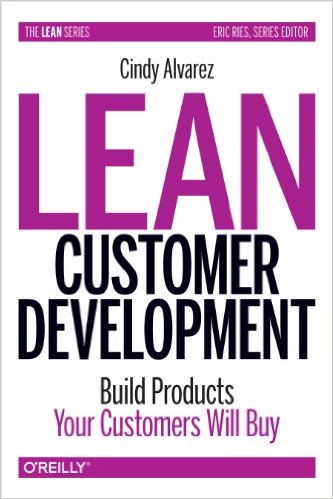
  • Lean Customer Development: A Book Review

    leanCustDev

    I’ve mentioned in my Resource page that I’m reading Lean Customer Development by Cindy Alvarez. It took me a while to finish it but I’m happy I did. In Product Management blogosphere and community you constantly hear about the importance of getting out of building, listening to customers, thinking about ideas in an “outside-in” fashion (where focus is on creating products/solution based on customer as oppose to “inside-out” way of creating product solutions from within the company) and having voice of customers understood during software lifecycle development.

    Rightly so, many people think the single most important responsibility of a good product manager is to bring insights about customer’s needs and wants to the company and be able to get the development group to act upon them. I agree with all these but up to now I’ve had a hard time connecting directly with customers. I found it intimidating to reach out to our existing customers and potential prospects. What am I going to ask them? what if I send the wrong impression? how should I conduct an interview and finally how to interpret my answers and share it with other team members? This book not only laid out the foundation of how to approach the customer development but also provided me with a step-by-step practical list of how to get started! How fantastic!

    Here are what I learned and some feedbacks I have on this book:

    Customer development is meant be done parallel to product development. It is about systematically testing your hypothesis (guesses) around existing problems and potential solutions by asking customers to validate them. As a result you will learn what customers really want, and what are the key solutions they’re willing to pay for them. To me it’s obvious why customer development is important because if you don’t know what customers really want, you end up building something that no one wants to buy/use. I have seen this over and over and it still amazes me how often companies invest in resources and time to build a product only to sunset it after a few months. As a product manager having solid experience on talking with customers and brining their insights to the company is one of the key skill sets.

    The process like many other scientific experiments are two fold. First you need to set up experiments by identifying assumptions and writing problem hypothesis then you go about validating (or invalidating) them. In order to do so you need to find “target customers”, plan the interview, ask questions, make observations and take notes. This book goes over each of these topics in great detail.

    Cindy explains how to overcome fear of rejection of people not wanting to talk and offers tips on how to get introduced to new people through your direct connections and/or social media (LinkedIn, and Quora). It covers administrative stuff such as scheduling, no-shows and all those little details that make or break the whole process like making sure email copy is concise enough to be able to read and reply back within seconds over a mobile phone. But the most important part is what questions to ask and what not to asks. I learned that  the main objective is to get customers talking and provide answers specific to their situation to learn as much as possible. Questions like “Tell me about how you do _________ today….” or “Do you use any [tools/products/apps/tricks] to help you get ________ done?” are best because they’re open ended and rely on past experience. Yes/No questions and questions that imply an answer within them (leading questions) are not as helpful.

    The book covers other aspects of customer development including tips on note taking, validating/invalidating hypothesis and sharing your discoveries with the team. Overall I enjoyed the book very much and I’ll keep going back to it for more how-to on my next round of talking to customers. The only thing I didn’t understand was the emphasis to call this book “Lean”. Sure, I understand that by  invalidating hypothesis around what customer’s going to use, we’re saving a lot of time and development not building features no one uses (eliminating waste–> Lean) but I see customer development as an integral part of product manager job in both startup and big corporations alike and therefore maybe I would just call it “A manual for Customer Development” 🙂

    Cindy also writes in her blog in the same approachable easy way about customer development and other areas of product management as well. Check her out!

  • The Toyota Way and its effect on Software Development

    Lean-Agile-Elephant

    Lean, Kanban, Agile, Scrum and Kaizen: You have heard them all before, you kinda know their core concepts but still wondering about what each of these concepts exactly do. What is Lean? How does Lean differentiate from Agile? What’s the difference between Agile and Scrum? Is Product Manager same as the Product Owner? What does Kanban have to do with Kaizen? Last but not least where do all these terms and concepts come from?

    I confess these concepts confuse me as well and I don’t know the answer to all of them (although I’m sure they all have been answered) but as I did some reading and now I can address the last two questions.

    The short answer is: Toyota! yes the big, giant Japanese car manufacturer. But how did automotive industry and in particular Toyota impacted Software Development Life Cycle so much?

    According to wikipedia, The Toyota Way is a set of principles categorized as: (1) long-term philosophy, (2) the right process will produce the right results, (3) add value to the organization by developing your people, and (4) continuously solving root problems drives organizational learning. Most people associate the Toyota Way or Toyota Product System (TPS) as a way to eliminate waste however continuous improvement (Kaizen) is another important goal. TPS has helped Toyota become the most valued car for drivers all around the world and a leader in automotive and manufacturing industry.

    Toyota success in reducing wastes (time, money, labour), getting faster results and continued improvement made it an attractive option to implement TPS techniques into Software Development  Life Cycle (SDLC). The result is Lean Software Development, Kanban and Kaizen. Let’s go through them each.

    Lean Software Development

    Lean methodology preaches many of same principles of TPS also known as Lean Manufacturing (confusing? I know!). Here are the 7 main principles: 1. Eliminate waste 2. Amplify learning 3. Decide as late as possible 4. Deliver as fast as possible 5. Empower the team 6. Build quality in 7. See the whole. For Software development these principles have translated into the following loop:

    Lean-Startup

    The whole idea is to validate hypothesis (ideas, products) as quickly as possible, and increase our understanding of what works and what doesn’t (product-market fit) before spending time, money and engineering resources to build some thing full fledge that no body wants to buys (high risk) . The MVP or Minimum Viable Product means putting minimum investment of time and effort to learn some and Viable means that the product is providing enough experience that shows value to your customer. The goal of an MVP is to maximize learning while minimizing risk and investment. The aim should be to validate the hypotheses and assumptions

    No team can get this right just by going through this once therefore we have the concepts of Kaizen (or Continuous Improvement). It’s a process to teaches people how to perform experiments on their work using the scientific method and how to learn to spot and eliminate waste in business processes.

    There is a lot of shared belief between Agile and Lean but what about their differences?  I took to Quora to find the answer and I found the answer given by Nick Coronges very sensible:

    “Lean is a predecessor of Agile, with some of the core concepts of Lean being incorporated into Agile. But one of the tenets of Lean that Agile elaborates on in a significant way is to focus on the delivery in the service of known needs in the present rather than needs forecast in the future…. In Lean, the idea is encapsulated in “Pull” processing you build what the system tells you in needs right now. In Agile you build software in short iterations, each delivering some immediate business value. After each iteration, you take new bearings, plan your next “sprint” and charge forward. Both of them see elaborate design and planning activities in advance as wasteful and misleading”

    Although I have worked with Agile team in the past I’m still learning. I have so far read Cindy Alvarez excellent book on Lean Customer Development (more on that later) and now I’m about to start Ash Muraya Running Lean.