Category: Book

  • Review of “Shape Up” book

    I enjoy reading books over blog posts and tweets because they provide more context and they can also go deeper. I recently finished reading “Shape Up” written by Ryan Singer. The book is available for free on Base Camp website and it definitely worth a read. Here is my take on it:

    What is Shaping Up and why does it matter?

    The book argues there is a Goldilocks state for defining requirement in a way that defined work is neither too vague nor too concrete. The idea is to provide the team (1-2 developers and a designer) enough context about the project’s goal and clear layout of the scope and constraints but allow them to define the nitty-gritty details themselves. I strongly agree with this approach as I made both above mistakes.

    Having too vague of a requirement (“This page should be easy to use”) leaves the team guessing on what the PM really wants. They either constantly interrupt their work for further clarification or they may build based on their own assumption. Either way the end result is either something that took much longer that it needed to or worse an application that is totally different from the PM expectation.

    The other extreme where the requirement has all the details (“Here is the exact designs for registration page”) brings its own risks. The biggest one is to create an illusion that PM knows all the answers and the team has no say in figuring out the direction of the product. The team job is only to follow strict set of instructions to get to the final product. If user experience or the flow doesn’t make sense then it’s on Product who should have should have figured it out sooner. This approach takes away the joy of collaboration, leaves the PM anxious about guessing everything upfront and the team powerless in coming up with solution.

    What I learned & loved about Shape Up

    The first part of the book talks about the characteristics of a shaped up work and how one should go about creating such work. The first thing is that the work should be completed and shipped within 6 weeks. I learned there are four main steps to follow: 1) Setting Boundaries which focuses on defining the problem 2) Rough out the elements is about sketching a solution without specifying too many details 3) Address risks and rabbit holes finds unanswered questions in the proposed solution to de-risk it and finally 4) writing the pitch is simply creating a document where all the above is laid out so that the team can understand them.

    What could have been better

    In summary Shape Up specially it’s first part is a must read for every product managers whereas other parts are less in control of the PM. For example, the book talks about the concept of circuit breaker (abandoning a project which has run through its 6-weeks cycle but it’s not completed) but that truly depends on leadership willingness to pull the plug and enforce that deadlines are firm. I haven’t seen that happening much in my experience and it’s not something that PMs can enforce by themselves.

    Another issue I haves is that the book comes us with some new catch phrases like “six week cycle”, “cool down period” and “betting table” but I’m vary of coming up with new hypes and new names. These terms tend to take a life of their own as the spread to other companies and turn into something quite different. I’ve seen this with concept like MVP, sprint, JTBD and my concern is that they will have the same fate.

    Overall though it’s one of the best free books out there that really teaches you something 🙂

  • What I learned professionally in 2019

    In 2019 I read 17 books which may not sound like much but for me it’s the highest number of books I’ve read in years (here is my “completed” books in Goodreads). In addition to an earlier post about my favorite 2019 books here are some other ones that I strongly recommend you to read:

    Better

    Better” simply was one of the best books I read and Atul Gawande is now my favourite writer. Even though Better mostly talks about what it takes to be a better doctor I found the advice universal to all professions and extremely useful. It talked about becoming better by applying diligence, incorporating ingenuity to understand root problems and do right by people while weaving fascinating medical and public health stories from around the world to deliver the points.

    Asshole survival guide

    “The Asshole Survival Guide” offers strategies in dealing with, avoiding and even fighting general assholery in your life. In addition to highlighting what makes a person an asshole, the author also sheds light on blame and call-out culture, reminding us that personal responsibility and empathy is key even when dealing with assholes. I must confess that I found the book depressing but useful.

    Obviously Awesome

    “Obviously Awesome” is one of the best marketing and strategy books I’ve read this year which provides practical and useful ways to look at a business and the efforts it takes to position a product or service. The advice is sound for both startups and mature products and it provides a systematic way to apply Jobs To Be Done for your marketing efforts.

    Committing to Be a Better Communicator

    This year my boss gave me critical feedback that despite my best effort when presenting to upper management or stakeholder in general, my ideas seems complicated and people leave the meeting feeling confused. This was an important discovery for me (as in my head I was very clear on what I want to convey) so I invested to fix this.

    I read some excellent books on public speaking and started going to Toastmasters to practice my public speaking because no matter how much you read about something you only get better by applying it in practice! Even though I’m far from perfect I learned about main elements of a talk and gained valuable insight on what makes a presentation great. I’ll definitely will continue this path.

    Letting Go of rigidness of Agile

    At the peak of this year I worked on six projects (2 of them major ones) with four remote teams. Since all teams worked in agile I attended a lot of ceremonies from daily stand ups to end-of-sprint retrospective. I understand the ratio of 1 PM to 16 engineers is out of whack but frankly I spent all this time hoping to help my team but not only many of these meetings weren’t good use of my time but they felt draining. In many of them it seemed the core Agile principles have faded; instead people were focused on the useless nuances like endless discussion about story points per user story (everything tended to be given 3, 5 or 8 points to show that its small but not too small), or doing retrospective rituals (what went well, what went not so well) with no tangible improvement in the way the worked or their output.

    As controversial as this may sound I don’t care about these agile ceremonies anymore. Don’t get me wrong, I still love the idea of iterating and delivering thin layers of end-to-end functionality as oppose to give me all the requirement upfront and I wait and see the result but for me an ideal way of working is an engaged team who understands product vision, asks questions when things are not clear, collaborates and challenges PM on the solution put fort, constantly shows the work completed and releases it to production regardless of how they do it.

    and with that looking forward to all the learning that 2020 will bring!

  • Best books I’ve read so far in 2019

    I love reading books and even though I’m a slow reader I’ve managed to read 8-9 books annually for the past couple of years. Here are the top 3 excellent books I’ve read so far.

    Radical Candor by Kim Scott

    This is by far my favourite book from last year. I loved this book so much because it not only provided a playbook on how to manage a team but also it provided this great framework for giving and getting feedback. The book is filled with great insights coming from Kim’s personal experiences from working in Google, Apple as well as having her own start-up. It’s a must read!

    Show & Tell by Dan Roam

    Show & Tell is easy to read and its pages are filled with pictures and drawings but don’t underestimate how powerful and informative it is. I learned so much from this book. Key takeaways, everything is told through a story and even though there are many varieties on presentations, they all follow a few outline formats. Also our brains are wired to process visuals so use pictures, images and diagrams to convey clarity.

    Confessions of a Public Speaker

    Like other Scott Berkun’s book, Confessions of a Public Speaker is an honest book that provides you with everything you need to know to speak well in front of any audience. From excellent tips on public speaking from what to do, how to do things in right way to funny stories of things gone wrong I enjoyed this book enormously.

  • How can we come up with new product ideas?

    How can we come up with new product ideas?

    I have previously written about Jobs To Be Done but the topic is still fascinating to me because I think this is a key tool to do customer discovery and ultimately drive product strategy. There are also so many overlaps between JTBD, design thinking and the concepts that were covered in Badass book that convinces me there is real value in understanding and pursuing them.

    In continuation with my previous research this time I managed to read the latest Clayton Christensen book along with one practical guide intercom published a while back on the topic. To refresh your mind here is what JTBD:

    A job basically is another way of defining underlying user’s need without focusing too much on user’s attributes. What I mean by user’s attributes are characteristics that define a user, like gender, age, occupation etc. The core theory of Jobs to be Done stems from the fact that customers pull a product or service into their lives when they are trying to solve a problem regardless of who they are. Problems in our lives always exist and we as customers pull products or services available to us into our lives as a way to satisfy those problem. The first product/services that address the job is not very good however they are competing with nothing (or as Mr. Christensen puts it they are competing with non-consumption) and they are making something happen when it was not possible before so we hire them. Over time because we are looking to make progress in solving our problem when we find a better, faster and cheaper solution we fire the old solution and hire the better solution.

    Let me explain these concept with an example: talking to your loved ones when you are far away is a universal problem. This problem fits a description of a job because regardless of people’s age, gender and/or location the need to communicate always exists. I remember when my aunt left Iran in 1985 to get her bachelor’s degree oversees, calling her was so expensive that my grand parents could only afford to talk for 10 minutes a week and those phone calls would cost a fortune at the end of the month. Few years later, when prepaid international phone cards came to market, national telecom company was quickly fired and prepaid phone cards were hired immediately instead. This solution was much more cost effective so now my grand parents could talk hours instead of minutes per week for the same cost. Fast forward to now where with ubiquitous availability of mobile phones and Voice over IP technology we now hire Skype and What’s app to talk however long we want for free.

    What is interesting is that JTBD helps us to view solutions for hire holistically by not just focusing on direct competitors in one market but to understand that the solution for hire can come from indirect competition. A few years ago if you asked business folks at telecom giants like Verizon in US or Rogers in Canada about their competitors I bet names like AT&T or Bell (which are other giant telecom) will pop up. They would never considered a rinky-dink company founded in Estonia that provided computer-to-computer calls to be a threat. Skype however was quickly hired by international students who were technology-savvy but poor to call home. They would tolerate bad voice quality and dropped calls as long as the talk to friends and family back home. Within 2 years Skype penetrated the market so fast that was bought for a record $2.5 billion in 2005. Fast forward to now where many of us don’t have a landline anymore let alone making an oversees call from it!!

  • Book Review: Badass – Making Users Awesome

    As you can see from my resource page, I am a huge fan of Kathy Sierra, so as soon as I learned she has written a new book I grabbed a copy and I was blown away. Kathy uses her distinctive style of using people with bubble talks to breakdown and explain complex stuff in easily understandable and fun way. However don’t be fooled that with all the white space, pictures and bubble speeches the book is easy or a fluff. Instead it is packed with lots of material on cognitive science and leaves you with many ideas on viewing your product in a totally different way.

    Making Users Awesome compromise of two different sections. 1. what is the reason that we use one particular product or service over other similar choices and 2. how we build skills over time and what are the ways we can accelerate learning skills over a short period of time.

    On part 1 the book’s main argument is that people pick a tool or service over others when they trust the recommendations they get about that particular product or service. When a friend or a family member talks to us about a recent app or a product they have used or when we pour over guests testimonial on Airbnb, we are likely to pick products, apps and hosts based on these reviews over what a particular brands is portraying. Why do we trust friends or even strangers over the brands in choosing something?

    The surprising answer comes from the fact that no one uses an app or a service because they really want to get good at using it; instead we use the app or services to be good at whatever real-world domain this software works with. We choose a recommended app or service when see someone else is making progress and becoming better at our desired real-world domain. Our desired real-world domain can be anything, it can be experiencing a city like a local or becoming a front-end web developer.

    The second part of the book looks at how people learn skills, the nature of expertise and how one can learn skills in a short span of time. One big take away for me was that, when we start learning something we try to take in everything and we are told that “Practice makes Perfect” so repeating and reviewing what we have learned so far will make us better. However the book shows us that we have only mastered a skill if we can achieve 95% reliability in repeating the task within 1-3 45-90 minute sessions.

    If we can’t achieve this then the typical reaction is to repeat the exercise all over again. However we should realize that if we can’t do the skill it’s probably because there’s a small sub skill that we need to master first. So our next step is to break this skill down into its components, master those and then try the original skill again. She calls this principle “Half-a-Skill betas Half-Assed skills” ! 🙂

    The book has so many other interesting takeaways and concepts that I didn’t cover to it so go read that book. Seriously. It’s badass itself!!

  • My Recommended Books with Strong Ties to Product Management

    Past few months I have read the following books all related to product management. They were all excellent. I learned new techniques to write user stories, tackle prioritizing them and to strengthen my concentration on the task at hand. They also provided me new perspective on what skills I need to master to become a better leader.

    Book Summaries

    user-story-mapping

    User Story Mapping

    I came across the book shortly after I became a Product Owner to my newly-formed agile team and like many other newbie product owners I was struggling with how to chunk out the product I envisioned to build into smaller pieces by writing user stories. I also had difficulty on how to write these stories in a way that captures all the nuances and requirements. Thankfully User Story Mapping provided an answer on above issues for me. Here are the two main things I learned from it:

    As a Product Owner I can never capture all the requirements of a product and I can’t specify all the functional and technical details in just one document. Even if I could, this document would be so massive that most people wouldn’t read it. Even if they would they will have their own interpretation of what it means!!

    A better approach is to outline my ask as a story and use that as a starting point to a productive conversation. By the end of this conversation, the ask is more clearly defined and everyone have a shared understanding of what it is. My goal is then to document our understanding using words and pictures.

    The real goal of using stories is shared understanding. Stories get their name from how they should be used, not what should be written.

    Another valuable lesson is that focusing solely on backlog is dangerous. Without having a big picture of what the product is trying to accomplish and what types of activities people use this product for, building one small thing after another from a flat backlog results in a product with mismatched features. The solution is to build a Story Map!

    The biggest benefit of creating a user story map prior to building from a backlog is that it forces you to tell the story of all the interactions the user has with the product to accomplish something. This will give you the big picture of what your product does and in the process it identifies gaps that no one has thought about before.

    Creating a user story map is easy. At the top of the map are big stories (also known as user activities). These stories are too big to do in one sprint or an iteration but once implemented they provide major functionality to the user. The big stories are placed next to each other from left to right. If nothing else, reading these stories provides a view of the whole system.

    However to get these big stories done we need to break them down further into smaller stories. These smaller stories or tasks are placed in the second row and this breaking down continues to a level that provides enough clarity into what the system does. For more detailed explanation check out this blog post from author itself.

    hard-thing-about-hard-things

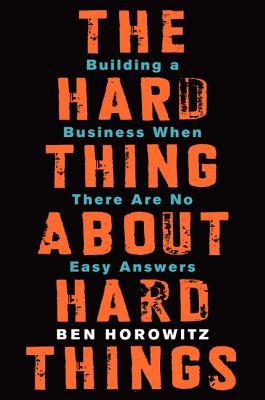
    The Hard Thing about Hard Things:

    I came across ‘The Hard Thing about Hard Things’ through reading Ben Horowitz’s blog and I am glad I read it. The book has two main parts: The first part is an easy to read, humorous but enlightening account of how Ben Horowitz managed Loud Cloud and Opsware, two companies he co-founded and run as a CEO. The second part is lessons  learned along the way of managing though hard situations.

    Second part of the book has too many good advice to recount them all and they go beyond my focus on Product Management. These are my most important takeaways:

    What resonated the most with me was the importance Ben placed on providing the right training for the job and making it clear what an employee is accountable for. He argues that if you don’t train your people, you establish no basis for performance management. As a result, performance management in your company will be sloppy and inconsistent.

    I personally have always struggled with this one. Unlike a developer or a designer who produces tangible results, product manager’s work spread across many areas and is not as tangible. If my company provides training for the specific skills and what it expects of me, it will save me a ton of time and the confusion and frustration of trying to figure this out by trial and error.

    Another issue this book confirmed for me is that everywhere there is bias to dismiss or rationalize leading indicators of bad news and only listen to good ones. Doesn’t this paragraph rings true in your head?

    If a CEO hears that engagement for her application increased an incremental 25% beyond the normal growth rate one month, she will be off to the races hiring more engineers to keep up with the impending tidal wave of demand. On the other hand, if engagement decreases 25%, she will be equally intense and urgent in explaining it away: “The site was slow that month, there were 4 holidays, we made a UI change that caused all the problems. For gosh sakes, let’s not panic!

    This explains why when Product Managers and executives see the growth is stalling and partners are leaving they avoid the obvious: The product is not the best in the market and is lagging behind competition. There is not much to do but to take the hard step of building a better product.

    Finally the most important and the most unexpected truth that came out of this book is on how to hire good executive. It talked about how to hire for key run a specific job (like VP of sales) for sometime yourself to learn what skills for that job you’re looking for. Although this one is not directly related to Product Management per se, I found it incredibly valuable in not only for hiring but also building framework for career development. You can read it in its own entirety in this brilliant post.

    deep-work

    Deep Work:

    This book is not directly related to Product Manager but it’s a book that if you are committed to follow through its advice it will change your life. The first part of the book starts with what Deep work is and why it is important to work on truly hard things with intense focus?

    Deep work is the ability to focus without distraction on a demanding task. It’s a skill that allows you to quickly master complicated information and produce better results in less time and it is a extremely valuable skill to have in the over-distracted world we live it.

    The author,  Cal Newport, goes on to explain in great detail on why deep work is valuable and meaningful but it is still rare. And honestly you do not need to read page after page to know why: Just take a good look at your work environment and daily habits and keep a tab on hours you actually focus on a hard task and I bet you’d be surprised on how little and fragmented your deep work is. I am first to admit that I suffer from a distraction and constant context switching: With so many interesting articles to read my browser has tens of tabs open that I read only half through. As part of open office trend and agile work style I work in a large room shared with 9 other colleagues and an ongoing open video conference so anyone can ask me anything anytime. And my day most of the time slices to a million of 30 min meetings.

    So how to cultivate the habit of working deeply in out day-to-day life? Here are my take away from the strategies suggested to in the four main rules suggested in the book to achieve deep work:

    Work Deeply

    Unsurprisingly this is rule number 1 on how to allocate enough time in your life to an uninterrupted work. There are multiple philosophies to schedule deep work in your day. For me building a daily routine around deep work and practicing it everyday is the way to go.

    Embrace Boredom


    Focus is a skill that must be developed before you can do it with any effectiveness and in order to strengthen your ability to focus, you must avoid the temptation to entertain yourself the minute you are bored by reaching out for the phone. One  suggested method to practice this skill is to cut off internet for some time interval and focus on the task at hand. Don’t check emails, surf the web or any other internet related activity during this time.

    I have been doing this for the past couple of days and I can tell you firsthand it’s hard! As soon as I find something that is hard to work through or make progress, a few seconds later, I catch myself to have opened a new tab or checked my email unconsciously.

    Quit Social Media

    Out of all rules outlined the most provocative one is to quit or dramatically cut back on the most beloved and addicting social media sites like Facebook, Twitter, Snapchat and so on. A core idea of this rule is that most people select digital tools using the any benefit mindset, which claims that you should use a tool if it can provide any benefit. This rule argues that you should instead use the craftsman mindset in which you only select the tools that provide the most substantial benefits to the things you find most important.

    Drain the shallows

    Finally having a fix time where you leave work and wrap up your work day forces you to be ruthless on what are the important stuff that get done.
  • Mobile First: A Book Review

    Mobile First Book

    A few weeks ago I finished this book. The book was written in 2011 by Luke Wroblewski who is an influential designer (if you don’t believe me check his twitter account with 150K followers) and although by technology standards it should be outdated but I found it quite relevant.

    The first chapter talks about why readers should care about mobile. 5 years after its publication I don’t think anyone need more data and proof on why mobile is important. In Chapter 2 he talks about mobile limitation and why it’s important to design with these limitations in mind. For example, it is true that despite bigger screens, cheaper data plans and longer battery life, people still find themselves in situations when they find their networks unreliable, their battery life fledgling and their screen too small compared to standard monitors. All of these limitations force product designers to focus on what customers need and this is actually a good thing:

    “When you consider the amount of useless navigation, content fluff, and irrelevant promotions that litter a typical web experience, you realize why the mobile diet can be good for both businesses and customers. Once people use the mobile version, it’s not uncommon for them to pine for the desktop version to be that simple.”

    Another factor to keep in mind is web performance. According to eMarketer, more people are relying on their mobile devices for digital access. This year in US alone, nearly one in 10 users exclusively go online through mobile and that number will continue to rise through the forecast period. And people dislike nothing more other than slow pages to load so anything can be done to increase performance on mobile should be done. At the highest level this means sending less stuff and using available browser and server technologies to speed up page load.

    He then briefly compares the native app vs mobile web and explain where each one is appropriate to use. This debate has been around for a long time but I find recommending one approach against another pointless. Because the answer is both!!Based on Forrester survey, majority of mobile users use mobile web sites for browsing and searching but they spent most of their times on native apps! So how can we explain this paradox?

    It turns out mobile web works better for consistency of experience across devices and for building a wide audience, but  mobile apps shine in creating a rich and engaging experience by leveraging more device specific capabilities like location and sensor data. Look at this excellent article to get even a better picture on why apps and the Web are both here to stay.

    I learned that mobile usage generally consists of a the following interaction types. These behaviors often determine how your mobile experience can be structured and organized to meet people’s needs:
    •    Lookup/Find: I need an answer to something now—frequently related to my current location in the world.
    •    Explore/Play: I have some time to kill and just want a few idle time distractions.
    •    Check In/Status: Something important to me keeps changing or updating and I want to stay on top of it.
    •    Edit/Create: I need to get something done now that can’t wait

    I also learned about Natural User Interface and some key concepts about organizing and navigating contents on mobile screens and areas suitable for placing common action buttons and what the best place to put ‘delete’ button so user doesn’t mistakenly hit it.

    Some of the concepts covered in the book like responsive design and touch gestures are now commonplace practices and screenshots of websites like flickr, yahoo and basecamp are out of date but none of really matter, I really enjoyed this book 🙂

  • Hooked: A Book Review

    What the Hooked book is about?

    hooked a habit forming product book reviewI recently finished reading Hooked: How to Build Habit Forming Products and wanted to share what I’ve learned from the book and answer the question if the book worth reading?

    The author Nir Eyal, who has an excellent blog called nirandfar.com (neat name, no?), looks into nuts and bolts of products which we spent hours of our time playing and working with. I believe he first self published the book based on his own research and posts he wrote on his blog but later the book was later got published through a publisher.

    I follow Nir’s blog also as it is focused on this topic and in I’ve learned interesting stuff (like messaging apps which I wrote about earlier).

    In my opinion this book is an extension of another excellent book Power of Habit which looks into inner mechanism of habits and how to use this mechanism to create a new behaviour or replacing an old one.

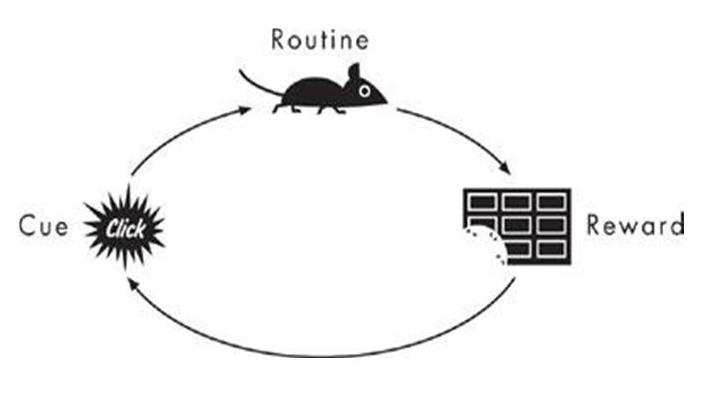
    In Power of Habit we learn that each habit or routine behaviour consists of 3 parts: 1) cue 2) routine 3) reward.

    habit-loop-charles-duhigg

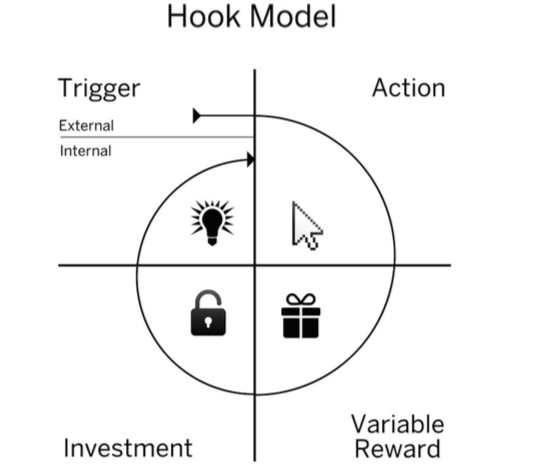
    Hooked looks at the above loop but with more detail and specifically from aspect of interacting with a product and he adds a fourth step to this loop:

    hook-model-nir-eyal

    So what are these 4 steps that we go through when we interact with sticky products?

    First one is trigger: Trigger is one thing that nudge us do some thing, this can be external and explicit like a button or a link with strong call to action or internal and implicit like a fleeting feeling of boredom or the need to stay in touch with friends. This usually makes us take the next step to either click the button or open facebook page to alleviate that feeling of boredom and loneliness.

    The key thing I learned from this chapter is to underpin the internal trigger through asking “Why” from users to understand the underlying their feeling (this is heavily emphasized in Customer Development book as well). Internal trigger is most powerful because it compels users to take action without any spending marketing dollar or nudge from product designer to use the product.

    Second one is Action: the steps you take within the application or with the product in hope of achieving results, getting  feedback from. This chapter makes it clear that user takes “action” when they have enough “motivation”, “ability” to do those steps and the “trigger. (Look at the Behavioral Model by venerable BJ Fogg). Since repetition is the key step in forming a habit, the easier the action the better chance of repeating it again in future. Nir shows interesting example of how producing content on the web has evolved from challenge of hosting a website to a few clicks to create and share content in Facebook.

    Third one is Variable Reward: Not knowing what to expect for reward or having a new kind of reward is the key concept in making users repeat their actions in hope of getting more satisfaction out of that action. For example constant scrolling on Facebook, Twitter or Pinterest happens because with each scroll user doesn’t know what type of update or interesting content s/he will face therefore it keeps at scrolling again. For more info take a look at this detail blog post on the subject.

    The last step is Investment: The last phase of the Hook is where user is asked to do bit of work. This last bit of the work is what makes the user to place more value in the product. The more time spent with one product and the more personal or professional data you put in, the more user become hooked with the product. It will also be more painful to leave. Why? because we value our effort more than it’s really worth and once we become familiar with one product they keep coming back to it. I think this can explains why financial analysts keep using arcade, difficult and extremely unfriendly Bloomberg machine as oppose to better designed, easier solutions.

    What do I think about the book?

    The good:

    • I liked the book even though I was familiar with the concepts explained in the book I like detail explanation of each part of a habit as well as lots of product examples accompanied book.
    • I also liked how Nir who started out as a person not familiar with the topic in a span of 2.5 years turned the table around, did all the research, self published the book and now is considered a subject matter expert in the field.

    The bad:

    • I started this book with a lot of expectation of more in-depth material perhaps because of my own fascination with behavior change topic I didn’t find a whole lot of new things in the book. I also found the focus of example mostly on consumer products. I wish there were more B2B example or at least more variety. There was too many reference to Pinterest for my liking.
    • I also found the end of chapter exercises too high-level and actually being able to work off of it. I myself always prefer detail, practical guides over to high level blueprints.

    photo credit: I used the hook model from nirandfar.com blog and the habit loop from power of habit book page. Hope it’s ok!

  • Lean Customer Development: A Book Review

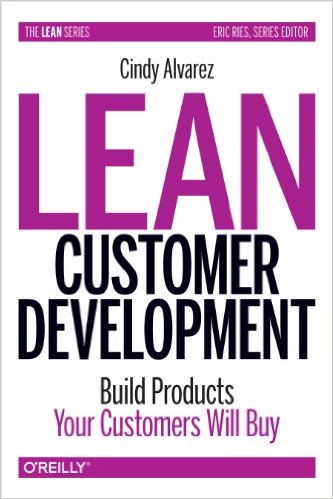
    leanCustDev

    I’ve mentioned in my Resource page that I’m reading Lean Customer Development by Cindy Alvarez. It took me a while to finish it but I’m happy I did. In Product Management blogosphere and community you constantly hear about the importance of getting out of building, listening to customers, thinking about ideas in an “outside-in” fashion (where focus is on creating products/solution based on customer as oppose to “inside-out” way of creating product solutions from within the company) and having voice of customers understood during software lifecycle development.

    Rightly so, many people think the single most important responsibility of a good product manager is to bring insights about customer’s needs and wants to the company and be able to get the development group to act upon them. I agree with all these but up to now I’ve had a hard time connecting directly with customers. I found it intimidating to reach out to our existing customers and potential prospects. What am I going to ask them? what if I send the wrong impression? how should I conduct an interview and finally how to interpret my answers and share it with other team members? This book not only laid out the foundation of how to approach the customer development but also provided me with a step-by-step practical list of how to get started! How fantastic!

    Here are what I learned and some feedbacks I have on this book:

    Customer development is meant be done parallel to product development. It is about systematically testing your hypothesis (guesses) around existing problems and potential solutions by asking customers to validate them. As a result you will learn what customers really want, and what are the key solutions they’re willing to pay for them. To me it’s obvious why customer development is important because if you don’t know what customers really want, you end up building something that no one wants to buy/use. I have seen this over and over and it still amazes me how often companies invest in resources and time to build a product only to sunset it after a few months. As a product manager having solid experience on talking with customers and brining their insights to the company is one of the key skill sets.

    The process like many other scientific experiments are two fold. First you need to set up experiments by identifying assumptions and writing problem hypothesis then you go about validating (or invalidating) them. In order to do so you need to find “target customers”, plan the interview, ask questions, make observations and take notes. This book goes over each of these topics in great detail.

    Cindy explains how to overcome fear of rejection of people not wanting to talk and offers tips on how to get introduced to new people through your direct connections and/or social media (LinkedIn, and Quora). It covers administrative stuff such as scheduling, no-shows and all those little details that make or break the whole process like making sure email copy is concise enough to be able to read and reply back within seconds over a mobile phone. But the most important part is what questions to ask and what not to asks. I learned that  the main objective is to get customers talking and provide answers specific to their situation to learn as much as possible. Questions like “Tell me about how you do _________ today….” or “Do you use any [tools/products/apps/tricks] to help you get ________ done?” are best because they’re open ended and rely on past experience. Yes/No questions and questions that imply an answer within them (leading questions) are not as helpful.

    The book covers other aspects of customer development including tips on note taking, validating/invalidating hypothesis and sharing your discoveries with the team. Overall I enjoyed the book very much and I’ll keep going back to it for more how-to on my next round of talking to customers. The only thing I didn’t understand was the emphasis to call this book “Lean”. Sure, I understand that by  invalidating hypothesis around what customer’s going to use, we’re saving a lot of time and development not building features no one uses (eliminating waste–> Lean) but I see customer development as an integral part of product manager job in both startup and big corporations alike and therefore maybe I would just call it “A manual for Customer Development” 🙂

    Cindy also writes in her blog in the same approachable easy way about customer development and other areas of product management as well. Check her out!